2026-09-15 ·
Winter Protection Tips for Epoxy Garage Floors in Plano
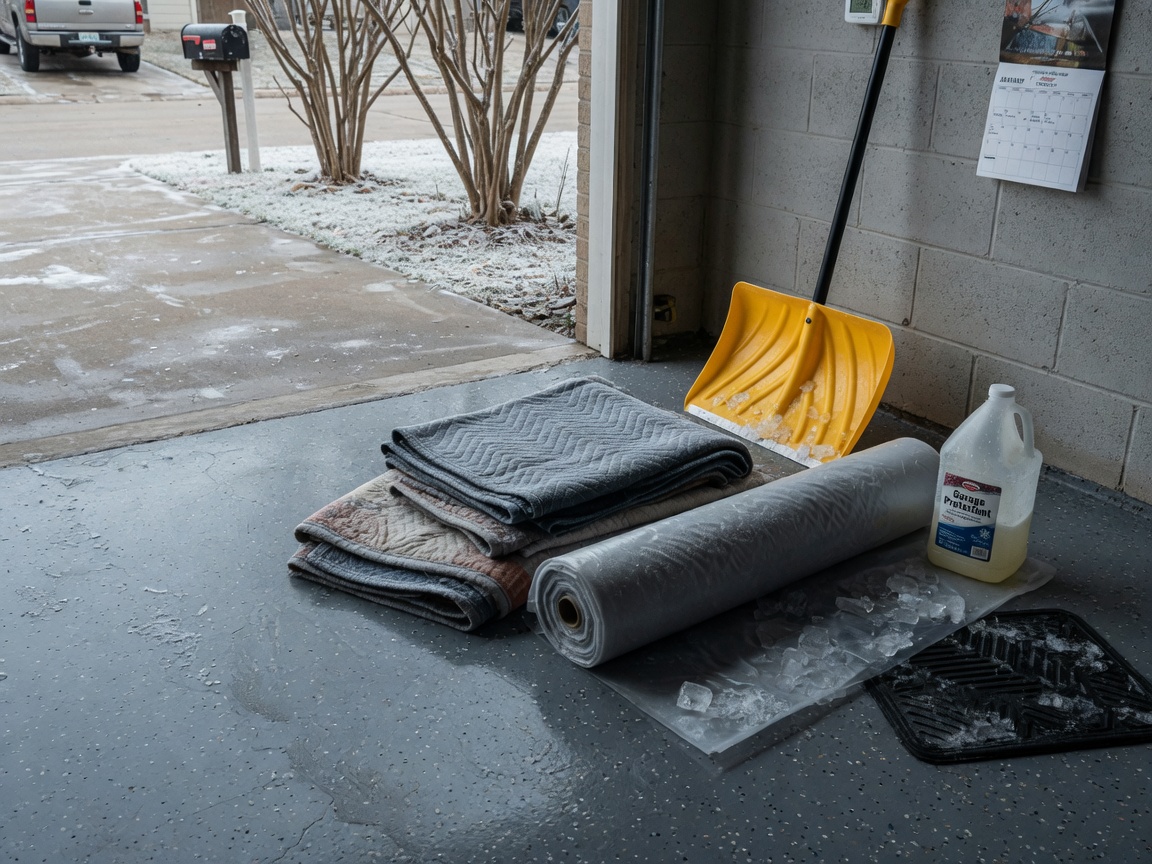
Plano winters stay mild most years with temperatures rarely dropping below freezing for long, yet occasional severe storms deliver the real threat to epoxy garage floors through standing water and de-icing chemicals tracked in from Legacy West or Willow Bend driveways. Homeowners in West Plano and East Plano see the biggest issues when garage doors allow rain or melted snow to pool against the coating edge. A polyaspartic topcoat adds the extra barrier needed to handle these conditions without peeling or discoloration over an 8–12 year lifespan.
How Plano Winters Affect Epoxy Garage Floors
Plano sits in Collin County where hot summers give way to mild winters punctuated by sudden storms rolling up from Dallas. These events push water under garage doors in neighborhoods like Downtown Plano and near Oak Point Park, softening the bond between concrete and epoxy if the surface was not prepped correctly. Salt and magnesium chloride from roads in Frisco and Richardson get tracked inside, etching the finish over repeated freeze-thaw cycles. Garages built in the 1990s and early 2000s often have older slabs with hairline cracks that expand slightly during these storms, letting moisture reach the coating from below. Checking for these entry points each November prevents small problems from turning into full delamination by February.
Pre-Winter Inspection Steps for Plano Homes
Walk the perimeter of the garage slab in Legacy Town Center or Willow Bend homes and look for gaps around the door threshold where water can enter during a storm. Clean any existing debris and apply a bead of exterior-grade caulk rated for -20°F to 200°F temperature swings. Test the floor slope with a level to confirm water still drains toward the apron rather than pooling near the epoxy edge. Homeowners who installed metallic epoxy flooring or decorative flake systems should photograph any existing micro-bubbles now so changes after the first winter storm are easy to spot. Schedule a surface check with Epoxy Flooring Of Plano if you notice white residue forming near the walls.
Adding Protection Layers Before Storms Hit
A polyaspartic topcoat application creates a non-porous finish that resists road salts better than standard epoxy alone, especially useful for households near the Plano Convention Center where traffic brings in more chemicals. For garages seeing daily vehicle use, choosing the right epoxy thickness for Plano garage traffic during the original install already helps, but a maintenance topcoat every 5–7 years extends that protection through Collin County winters. Apply the topcoat when daytime temperatures stay above 50°F for 48 hours, which occurs often enough in December and January. Avoid parking on the fresh coat for a full 72 hours so it cures fully before the next possible storm.
Ongoing Care Through Winter Months
Sweep or blow out the garage weekly to remove salt before it sits on the epoxy surface. Keep a mat just inside the door to catch moisture from shoes and tires after storms. If a crack appears, contact Epoxy Flooring Of Plano for epoxy floor repair rather than letting water migrate under the coating during the next freeze. Monitor humidity levels inside attached garages in West Plano; even mild winter air can carry enough moisture to affect edges if doors stay open during temperature swings. These habits keep the floor looking uniform from one season to the next without extra cost.
When to Schedule Professional Touch-Ups
If you notice dull patches or small chips after the first January storm, book a repair visit during the Mon–Fri 8am–6pm or Sat 9am–2pm window before spring humidity returns. Early intervention on a single panel prevents the need to recoat the entire 400–600 square foot garage later. Residents in East Plano and near Oak Point Park often combine this check with the related article on maintaining epoxy floors during Plano's humid spring and fall months to plan year-round care.